A school shorts order fails when the buyer sends only a student count and a colour name. You need a size-wise production brief, measurable garment specifications, approved samples and written commercial terms so the delivered shorts match the students, the uniform policy and the replenishment plan.
Key takeaways
- Write student counts, delivery dates, colours, artwork and size quantities into the brief.
- Use student measurements to build a size-wise order plan with replacement stock.
- Approve a sealed sample and record fabric, stitching, colour and logo requirements.
- Confirm production capacity, replenishment terms and delivered-goods inspection criteria.
Build a complete school shorts purchase brief before requesting quotes
Send a supplier a written brief before requesting prices. For school short uniform orders in ahmedabad, state the student count, required delivery date, approved school colours, logo artwork and placement, and the quantity required in every size.
- Give the size-wise quantity plan, not only the total. Base it on measured waist, hip, inseam and outseam data, allowing ease for sitting, running and classroom movement.
- Attach the approved design: woven or knitted construction, fibre composition, fabric weight in GSM, weave, waistband type, pocket count, fly or closure, hem allowance and label position.
- Define colour with a physical approved swatch or an instrumental colour value. “Navy blue” alone permits shade differences between dye lots and repeat orders.
- State packing and delivery requirements, including individual polybags, carton labels, embroidery or printing, transport, taxes, cutting-loss allowance and spare or replacement pieces.
Ask a bulk uniform school for shorts supplier in Ahmedabad to confirm capacity by size. Total-piece capacity is not enough if the supplier lacks fabric, trims or sewing capacity for the smallest or largest sizes.
Put acceptance terms in the brief before production. Separate checks for garment measurements, workmanship, shade, stains, holes, seam defects and packing errors, and name the sampling plan, such as ISO 2859-1 AQL inspection. This prevents an informal visual check from accepting mixed shades, wrong size ratios or unusable pieces.
Require the quote to show every inclusion as a separate line.
Turn student measurements into a size-wise quantity plan
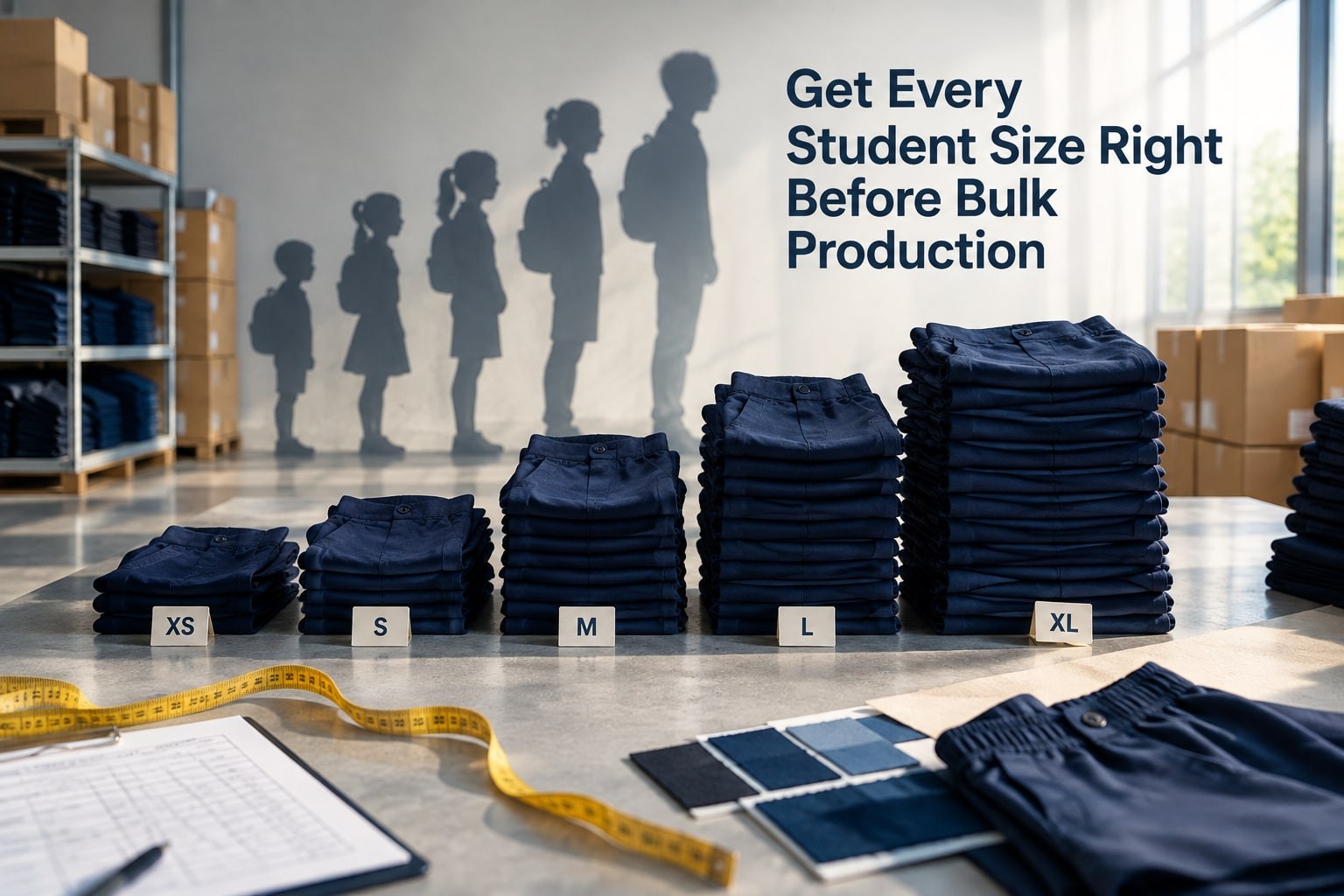
Use measured student counts and an approved garment size chart, not an equal split across sizes. Equal quantities leave common sizes short while smaller or larger sizes remain unused.
1. Measure each student consistently. Record waist at the intended waistband position, hip at the fullest point, inseam from the crotch to the intended hem, and outseam from the waistband to the hem. Record the date and measuring method so different volunteers do not create conflicting results.
2. Map every student to the supplier’s size chart. Do not convert a waist measurement into a size without checking hip, inseam and outseam; a short with a correct waist can still restrict sitting or ride up during running.
3. Check the approved sample on representative students. Confirm enough ease for classroom sitting, stair climbing and sports-ground movement, then adjust the size allocation before counting. Use the garment’s finished measurements rather than adding an informal extra allowance to every student.
4. Total the required quantity by size, school section and delivery batch. Keep a separate line for spare or replacement pieces instead of hiding them inside the student count. This prevents one carton from appearing complete while a size is missing.
5. Send the size-wise schedule with the bulk school uniform shorts enquiry and request capacity confirmation for each size, not only the total quantity. Ask the supplier to show sample approval, size-set approval, production, packing and replacement quantities separately in the quotation.
Recheck the final ratio against enrolment records before issuing the purchase order. Record any late admissions or expected growth as a separately priced replenishment requirement, not as a reason to order equal quantities.
Compare fabric, construction and approved uniform details
Compare every quote against one written specification; a size range alone is incomplete. Record fibre composition, woven or knitted construction, fabric weight in GSM, weave, waistband type, pocket count, fly or closure, hem allowance, label position and approved colour reference.
A bulk uniform school for shorts supplier in Ahmedabad should confirm capacity by size, not only total pieces, because fabric, trims or sewing slots may run short for extreme sizes.
| Choice | Compare | Risk if wrong |
|---|---|---|
| Fabric | Cotton, polyester or blend; GSM, weave, shrinkage, pilling and colourfastness | Shorts become hot, faded, misshapen or worn quickly |
| Ventilation | Lighter fabric or mesh panels against opacity, modesty and snagging; request air-permeability or moisture-test requirements | “Cool” fabric looks transparent or traps sweat |
| Construction | Elastic, half-elastic or fixed waistband; pocket count, seam strength, fly, reinforcement and hem allowance | Waistbands twist, pockets tear or seams split during movement |
| Approved details | Physical colour swatch or instrumental tolerance, logo position, label location and closure design | Dye lots, branding or replacement pieces fail school standards |
Check that the inseam and outseam permit sitting, running and classroom movement without excessive exposure. Compare the same measurement points across the approved sample, including waist, hip, rise and leg opening.
Put the acceptance rules into the quotation: measure garments size by size, inspect shade, stains, holes, seam defects and packing errors, and state an AQL plan such as ISO 2859-1. This gives you a defensible comparison between suppliers rather than choosing the lowest piece price.
Approve samples and define the inspection standard before production
Confirm conformity with a signed, sealed reference sample and a written inspection plan before cutting begins. A verbal approval of one prototype will not control shade, measurements or stitching across a large lot.
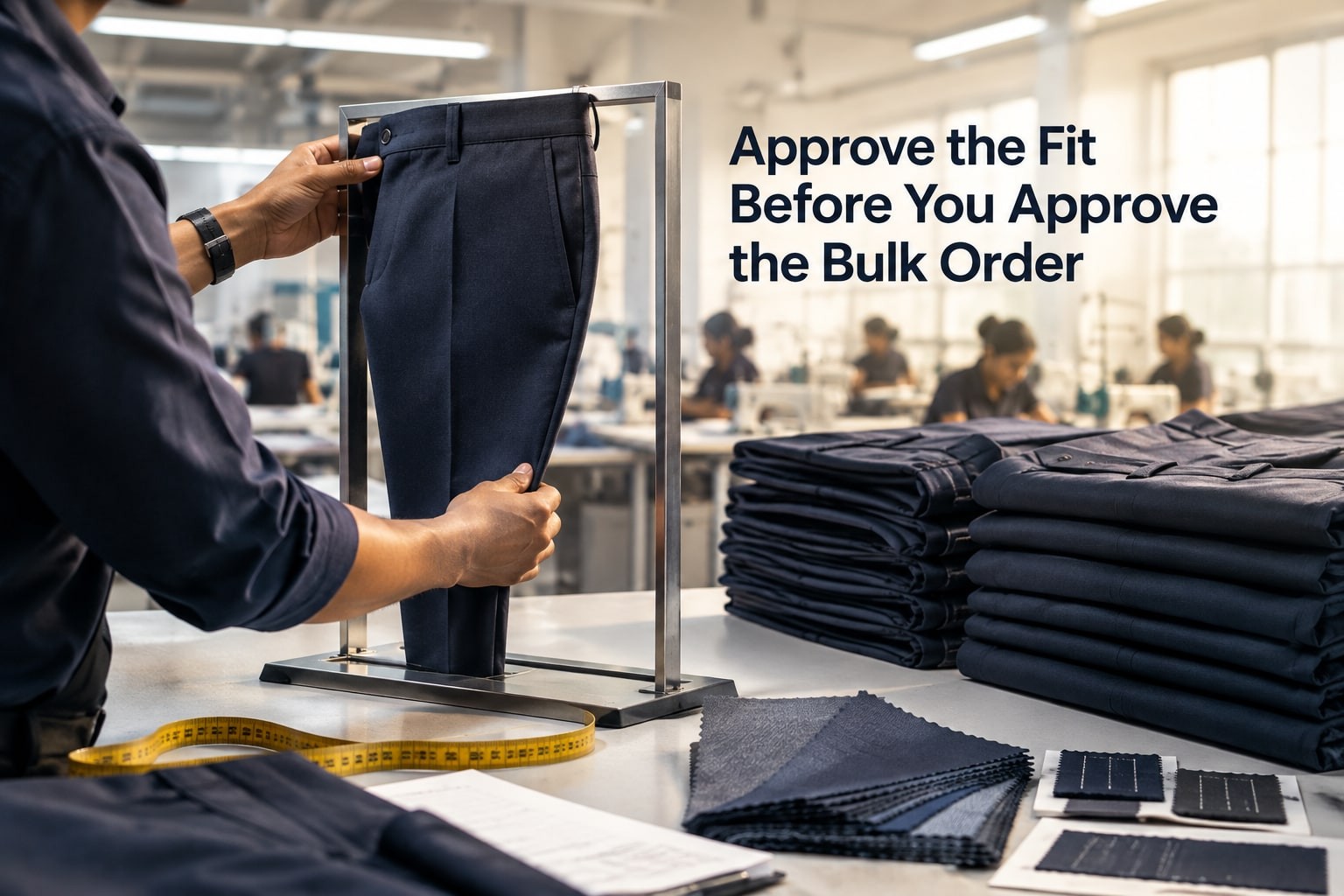
1. Approve a size-set sample, not only one pair. Measure waist, hip, inseam, outseam, rise, leg opening, waistband width and pocket position for every required size. Record permitted tolerances beside each measurement, then retain one signed sample with the supplier and one with the school.
2. Define colour against a physical fabric swatch or an instrumental requirement, not the words “navy blue”. Record the colour reference, lighting condition and any allowed shade difference between dye lots. Reject pieces with visible panel-to-panel variation, bleeding or staining.
3. Approve the completed garment after washing it according to the care label. Check shrinkage, waistband distortion, seam puckering, colour migration, label damage and print adhesion; fabric approval alone will not reveal these failures.
4. State the inspection method in the purchase order. Use lot-by-lot attribute sampling under ISO 2859-1, with the inspection level, sample size and AQL for critical, major and minor defects agreed before production. Classify holes, open seams, broken fasteners, incorrect measurements, wrong labels and packing errors rather than recording only “pass” or “fail”.
5. Require a pre-dispatch inspection report showing lot number, sizes inspected, defect counts, measurements, shade checks and packed quantities. Release the balance only when results meet the signed standard.
Check supplier capacity, replenishment terms and delivered conformity
Before issuing the purchase order, get written confirmation that the quoted price covers the exact quantity, sizes, packing and delivery split you need. A low piece rate is irrelevant if cartons arrive short, late or in mixed shades.
1. Ask the school shorts bulk supplier in Ahmedabad to confirm capacity by size, not only total pieces. Require available fabric, trims and production slots for each size, plus the date for a size-set sample and bulk completion.
2. Put these specifications on the quotation and purchase order: woven or knitted construction, fibre composition, GSM, weave, waistband type, pocket count, fly or closure, hem allowance, label position and approved colour reference. State whether embroidery or printing, individual polybags, carton labels, transport and taxes are included as separate lines.
3. Define replenishment terms before production: minimum reorder quantity by size, price validity, lead time, fabric and colour matching, and responsibility for urgent transport. Ask how the supplier will replace defective or incorrectly sized pieces and handle shortages in a school, class or size carton.
4. Set acceptance checks for delivered goods: count by size, shade against the approved reference, measurements, stitching, closures, labels, packing and visible defects. Record the inspection window and require replacement or credit for non-conforming pieces.
Ask AMIT UNIFORMS to attach this size-wise capacity and conformity schedule to its quotation; the document makes competing suppliers comparable and exposes gaps before payment. Do not accept “bulk school uniform shorts” as a complete commercial description.
Related product
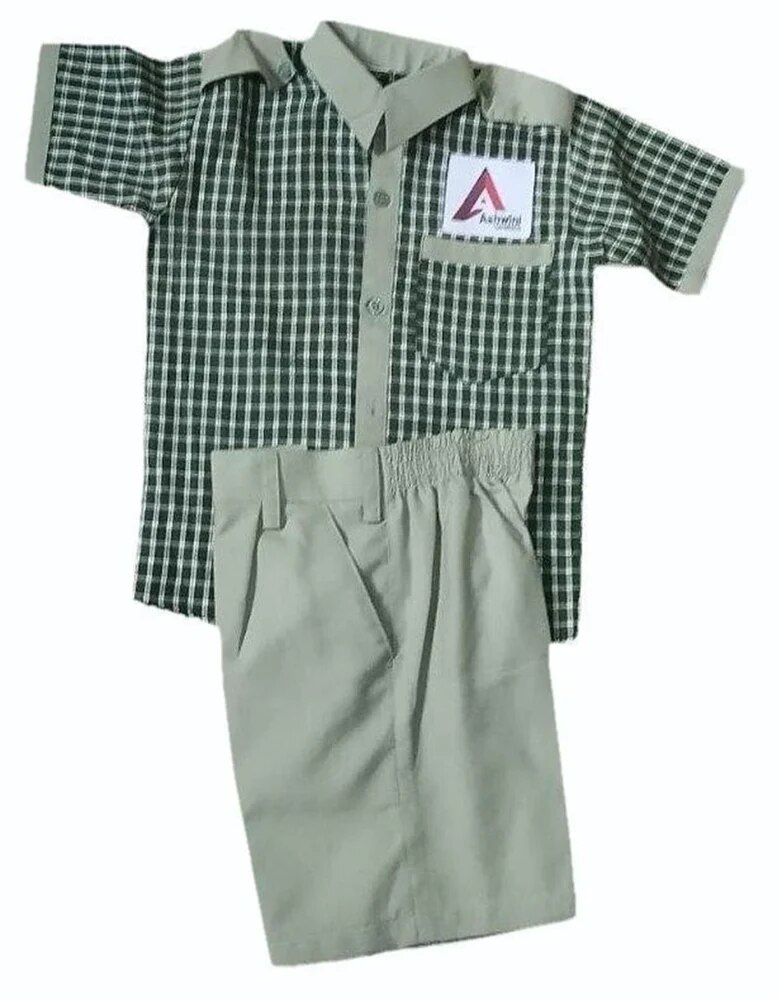 | SCHOOL UNIFORM SCHOOL SHORT MANUFACTURER IN AHMEDABAD Amit Uniform specializes in manufacturing high-quality school shorts, designed for both comfort and... View product → |
Frequently asked questions
What should a school shorts purchase brief include?
Include the student count, delivery date, approved colours, logo artwork and placement, fabric requirements, and quantity required in each size.
How do you turn student measurements into a size-wise quantity plan?
Collect waist and outseam measurements, group students by the approved size chart, check borderline measurements, and add a documented allowance for replacements.
What should you compare when choosing bulk school uniform shorts?
Compare fabric composition and weight, colour matching, waistband construction, pocket and seam details, logo application, size grading and compliance with the approved school design.
How should you approve a sample before production?
Inspect the sample against the written brief, record measurements and construction details, approve the exact reference sample, and define acceptable tolerances for production inspection.
What supplier terms should you confirm before placing an order?
Confirm available production capacity, manufacturing and delivery dates, minimum order quantities, replenishment lead times, size replacement terms and the process for handling non-conforming goods.
Keywords